Saturday, June 4, 2022

Barcelona Part 4: The Chalcolithic or Copper Age


Otzi the Iceman, as he may have looked in life. Otzi's mummy was  discovered in 1991 under a melting glacier in Italy's Otzal Alps. He died about 5,300 years ago, killed by an unknown assailant who shot a flint arrowhead into his back. This happened early in the transition from the Neolithic (New Stone) Age to the Bronze Age. The period is called the Chalcolithic (Copper) Age and it marked the beginning of metallurgy, a major step in the development of civilization. 

People had been killed in similar ways to Otzi since the bow was invented 7,000 years previously. Who killed him and why are still a mystery, but robbery was not the apparent motive. Otzi's possessions were still scattered about him when his body was discovered, including several stone tools and weapons. Also found nearby was his hand-axe, tipped with a valuable copper blade (see above). 

While Otzi probably never lived in or even visited Iberia, he was typical of the inhabitants there and throughout most of early Chalcolithic Europe. While copper smelting began in the Balkans about 7,000 years ago, this technology didn't arrive in northeastern Iberia until about 5200 years ago. The Chalcolithic era in Iberia ended about 1000 years later, when people began alloying copper with arsenic and tin to create bronze. 


Life in the Chalcolithic Era

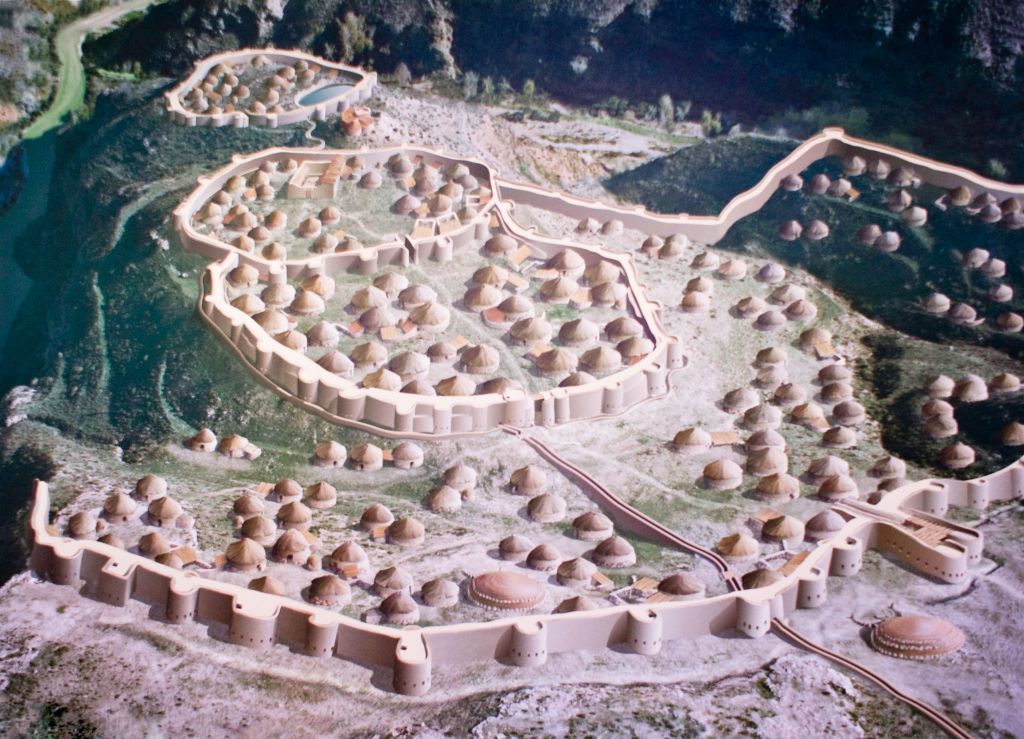
Model of the fortified town of Los Millares in southern Iberia. Otzi and the overwhelming majority of other Chalcolithic people lived in hamlets and small villages like their Neolithic forebears. However, during the middle of this transitional period, large fortified towns like Los Millares began to appear. About a thousand people lived in the town in circular-shaped dwellings. Also present were workshops for smelting copper, gold, and silver, making Los Millares an important trade center. 

The town was occupied from about 5000 to about 4000 years ago and its economic activity seems to have made it a target for raiders. Los Millares was positioned on a hill and protected by a series of defensive walls, buttressed by multiple bastions. The main gate is a small fort in itself. All this indicates that the Chalcolithic period was a time of rising organized violence. However, attackers armed only with bows and spears would have found it difficult to overcome these defenses. 


Stone tools were still employed during the Chalcolithic period. The artifacts above were found near the town of Berga, north of Barcelona. The two tools on the left are for cutting, while the one on the right is probably the tip of a spear. The manufacture and use of stone tools continued long after copper was first smelted in the Balkans. 

In some areas of Europe, stone tools were in use well into the Bronze Age, just as horses have continued to be used as work animals long after the invention of the internal combustion engine and typewriters were still widely used for many decades after computers were developed.


People in a fortified town using Chalcolithic technologiesTwo men on the left are pouring molten copper into a mould while the man in the center hammers a copper object into its final shape. The man standing in front of a tall kiln is smelting copper while the boy to his right feeds wood into the fire. The woman to their right is spinning wool. The boy seated in the foreground is starting a fire using a bow drill

 Copper won't melt until it reaches 1084C (1983F), but cooking fires burn at much lower temperatures. So, the first smelting probably have occurred by accident in a potter's kiln, since it was the only source with sufficient heat. Once released from the ore, copper is highly malleable, particularly in a liquid state. A potter could easily have crafted moulds to create a variety of shapes which were then hammered and polished. Small axes, like the one carried by Otzi, were probably the earliest manufactured objects.


Selection of early copper and bronze tools. These were found in Catalonia, at sites north and west of Barcelona. The small copper ax head on the right is the oldest, possibly from the period around Otzi's time. Moving toward the left, the tools are progressively more recent, ending with a Middle Bronze Age spear point on the far left.The first uses of copper and bronze were probably utilitarian, i.e. to create tools and weapons. Objects for personal adornment no doubt came later.


Various pottery used for food storage and preparation. The Chalcolithic person's diet depended upon geographic location, but was pretty much the same as his Neolithic predecessors. When scientists examined Otzi's stomach contents, they determined that his last meal was heavy in the high-energy animal fat required by his Alpine lifestyle. 

Archeologists have sometimes found food traces from storage or cooking in pottery like that shown above. Included were cultivated crops such as wheat and barley, as well as natural plants such as berries and nuts and traces of various animal fats. 

Iberia's Chalcolithic people raised pigs, sheep, cattle, and goats for meat, and sometimes supplemented this with protein from wild game. The cattle and goats also provided milk, as well as hides for clothing, tools, and weapons. Sheep's wool was spun into yarn that was then woven into clothing.

The Bell Beaker Phenomenon


Artist's conception of a Bell Beaker man
. The drawing follows closely the clothing, weapons and other artifacts found in a Bell Beaker grave. Scientists have fiercely debated the significance of the Bell Beaker phenomenon ever since grave goods from the culture were discovered from southern Iberia to northern Britain and from the Atlantic Coast as far east as Poland. 

The oldest artifacts have been dated to 4,500 years ago and were found in southern Iberia. Archeologists initially thought that they represented the remains of a great migration out of the Iberian Peninsula to far-flung areas of Europe. The difference between the oldest and most recent artifacts stretched over a period of only a few hundred years. The finely crafted grave goods included the distinctive pottery that gave the culture its name. 


Pottery in the Bell Beaker style. These pots were found in a cave called Cova de Toralla, northeast of BarcelonaTrace remains have been found inside many Bell Beaker pots. Tests show that they were used as kitchen utensils, funeral urns, copper melting crucibles, and as containers for alcoholic beverages such as mead and beer. The pottery is usually found next to finely crafted copper daggers and arrowheads, as well as stone bracelets for archers. Other typical grave goods are prestige items like gold ornaments and V-perforated bone buttons. 

However, something was quite odd about these finds. For one thing, the direction of the supposed Bell Beaker migration was unusual. Paleolithic Homo sapiens had moved out of Africa, then headed north and west, finally arriving in Iberia. Neolithic farmers had begun in the Middle East and also moved north and west, then south into Iberia. Pastoralists from the Russian steppes again moved west, ending up in Iberia and finally in Britain. 

New technologies such as farming, metallurgy, and wheeled vehicles accompanied these migrations. However, in the case of the Bell Beaker phenomenon, the movement was in the opposite direction, out of Iberia and then north and east. In addition, Bell Beaker graves were not located in broadly contiguous areas, as normally occurred in migrations. Instead, there were small concentrations of burial sites in widely-scattered areas. 


Copper axe, called a halberd, found at a Bell Beaker site. In recent decades, archeologists have begun using DNA and genome-tracing in their work. When they applied these to the human remains in Bell Beaker graves, more questions arose. Most of the remains in the scattered sites were not genetically related to those found in southern Iberia. Further, the DNA in the different areas to which the supposed migrations extended also did not match each other. 

It seems that large numbers of Bell Beaker people were not moving around. On the other hand, Bell Beaker goods and ideas were traveling widely, apparently transported by long-distance traders. We should remember that when iPhones or Beatles songs rapidly spread around the world, they were not accompanied by large migrations of Americans or British people. These hugely popular cultural icons were quickly adopted by local people who had access and could afford them.


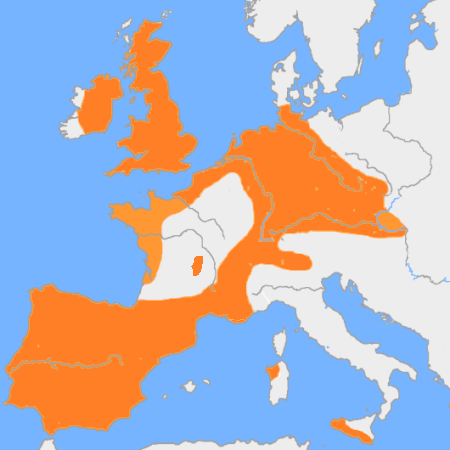
Map showing the distribution of Bell Beaker sites in Europe. After beginning in the Iberian Peninsula, the phenomenon spread relatively quickly into central and northern Europe before finally crossing over into Britain. The Bell Beaker cultural package contained what we would now describe as "high-end" goods. Not surprisingly, the burials in which Bell Beaker goods have been found tend to be those of the high-status people who could afford them. 

Then, just about the time when the Bell Beaker phenomenon reached central Europe, it encountered an actual mass migration which was moving in the traditional east-to-west direction. These were the the Yamnaya pastoralists, who would bring massive social and technological changes to the Neolithic/Chalcolithic cultures of Europe.


The Yamnaya migration

Yamnaya warriors were well-armed with copper weapons.  The Yamnaya probably originated as Neolithic farmers who moved north from Anatolia to the Eurasian river valleys. Yamnaya is a Russian word that refers to the pits they used to bury their dead. They were a culture that developed in the Eurasian steppes north of the Black Sea. These great grasslands were not suitable for farming, given the technology then available, but were ideal for pasturing herd animals. 

The Neolithic culture had always included animal herding. However, once the Yamnaya had become mobile through their invention of wagons, they moved out onto the steppes to become full-time pastoralists. This highly mobile and nomadic lifestyle produced a hierarchal social structure based on chiefs. Looking for wealth and glory, groups of young young men went on raids to capture animals and women. From this, the Yamnaya developed a warlike culture not unlike that of the Huns and Mongols of later eras.


Scale model of a wagon found in a Yamnaya grave. As with metallurgy, a pottery shop in Mesopotamia was probably the site where the first wheel was invented about 6,200 years ago. The potter didn't do it to transport people or cargo, but as an easier way to make pots. Around 5,500 years ago some Yamnaya had the bright idea of turning the potter's horizontal wheel on its side. By mounting it on an axle with a wheel on the other end, this new device could then carry a load. 

Inventing wagons was a huge technological achievement because it involved solving a variety of difficult problems. These included inventing the composite wheel, figuring out whether to use fixed or moving axles, and how to break cattle to the harness. The first wagons were probably pulled by oxen (castrated bulls), although there is some evidence that the Yamnaya also rode horses. However, ancient horse DNA shows that they were not widely used until later times.

Although these early wagons were slow-moving, they set the Yamnaya population free to wander the steppes. Instead of carrying everything on their backs, they could now haul their shelter, equipment, and families as they followed their herds. They no longer needed fixed villages because their food, as well as supplies of leather and wool, were all "on the hoof". In fact, the health and stature of the pastoralists improved over that of their Neolithic farmer forebears because of their improved diet. 


The Yamnaya spread rapidly into all parts of Europe. Neolithic farmers took about 4,500 years to reach Iberia from the Middle East. By contrast, the Yamnaya's mobile lifestyle and lack of attachment to any particular place allowed them to cover about the same distance within 500 years or so. And, as they encountered more and more farm settlements, their warlike organization enabled them to dominate the people in them. 

Conflict and violence had certainly increased among the farmers of the Neolithic and early Chalcolithic periods, but nothing really prepared them for the aggressive and fast-moving tactics of the newcomers. When the Yamnaya reached central Europe, they encountered the Bell Beaker phenomenon and quickly incorporated its technological advances--particularly in metallurgy and weaponry--into their culture. This further strengthened their ability to dominate local people wherever they went, both militarily and culturally. 

The Yamnaya society of male warriors ruled by chiefs was strongly hierarchal and patriarchal. They introduced the idea of personal ownership of property and its transmission through male lineage. The status of women had gradually deteriorated from the end of hunter-gatherer times through the Neolithic and early Chalcolithic periods. With the arrival of the Yamnaya, the patriarchy became ascendant, and remained so for the next 4,500 years.


Yamnaya man's face re-constructed from skeletal remains.Their migration can be traced both through DNA and language. Recent studies have shown that the DNA of Neolithic males (but not females) disappeared in most of Europe only a few hundred years after the Yamnaya arrived. Even today, most European DNA traces back to the steppe pastoralists. Some have suggested that this points to a prehistoric genocide, but no archeological evidence has been found to support the claim. 

It is more likely that the dominant social, political, and cultural position of the Yamnaya men would have made them more desirable to the local women. In fact, the average male/female ratio among the Yamnaya who initially migrated into Europe was 10/1. All those young male warriors would certainly have been looking for women with whom to mate. As recently as WWII, many European women gravitated toward German soldiers when the Nazis seized the continent. 

The other major cultural artifact of this great migration is language. The Yamnaya spoke Proto-Indo-European (PIE), the father of nearly all European languages. Although most of these languages are today mutually unintelligible, they all derive from PIE. The language of the Neolithic/Chalcolithic farmers survives only in a few tiny enclaves, like the Basque region of northern Spain.

This concludes Part 4 of my Barcelona series. Hope you found it interesting and enlightening. If you have any thoughts or questions, please leave them in the Comments section below or email me directly. If you leave a question, please include your email address that I may respond in a timely fashion.

Hasta luego, Jim


Tuesday, May 17, 2022

Barcelona Part 3: The Neolithic Revolution

Artist's conception of life in the early Neolithic period. A woman weeds crops with a hoe made from a animal shoulder blade attached to a stick. Her husband and his wolf-like dog return from a hunt carrying a deer that he has killed with a bow and arrow. This image nicely captures the beginning of the Neolithic Revolution, which marked the transition from scattered groups of hunter-gatherers to sedentary agricultural communities. 

As a revolution, it was very gradual. The transition began in the Fertile Crescent of the Middle East about 12,000 years ago. Slowly, the Neolithic culture spread through the Balkans into Central Europe and along the Mediterranean coasts of Europe and North Africa. Finally, about 7,500 years ago, it reached the eastern coast of Spain. This new way of life did not develop independently among Spain's late-Paleolithic hunter-gatherers, nor did they simply adopt a new set of ideas from elsewhere and spontaneously abandon their ancient culture.

Instead, the Neolithic Revolution arrived with immigrants seeking new lands. The farmers who arrived in Catalonia about 7,500 years ago had genetic links to modern inhabitants of the island of Sardinia. Initially, contacts between the indigenous people and the newcomers appear to have been peaceful, possibly because of a mutual interest in trade. It also may have been without conflict because the newcomers moved into land that the hunter gatherers had previously abandoned.

Objects of Daily Life

The immigrants arrived with a variety of tools. Some, like the stone core (top center) and flaked cutting tools below it would have been similar to those of the hunter-gatherers. Others, like the wood-handled ax, would have differed somewhat. Neolithic ax heads were ground and polished, rather than flaked from a core. The ceramic bowl on the left is entirely a product of the sedentary lifestyle of the Neolithic Revolution. 

Pottery is too heavy and fragile for nomadic people to carry during their wanderings. Instead, they used plant fibers to create light-weight basketry. The beginning of the Neolithic age in a given area is linked with the presence of pottery. Changes in pottery styles can be used to date other artifacts, especially since potsherds can survive for thousands of years, while wood and plant fiber are perishable. 
 

Tools they used


Cutting tools for agriculture and construction. The curved tool at the top has a series of serrated stone blades fitted along its inside edge. This may be a small scythe for harvesting plants, or possibly a light saw. The purpose of the tool below it is unclear but it may be a sort of punch or chisel. The Neolithic farmer needed a whole set of specialized tools for agriculture, animal husbandry, and construction of permanent dwellings. 

While Neolithic farmers no doubt continued to supplement their diets with wild game, particularly if their crops failed, they had long ago stopped making most of the highly specialized tools that the hunter-gatherers had developed over the millennia. As they struggled to set up productive farms in a new and unfamiliar land, the ability to obtain specialized hunting tools would have been important. Trade between the two groups may help explain why the evidence of early conflict is so limited. 

In addition to hunting tools, the early farmers would have needed information and guides to help them to navigate their new world. The hunters would have wanted the food and other portable goods that the farmers produced. Genetic evidence of interbreeding indicates that the trade may have included women, either as objects of exchange or as attachments that occurred during the trading visits. 


Weapons and warfare

Stone-tipped spears were used for hunting rather than war. Among the many Paleolithic cave paintings found in Spain, human figures seldom appear, except for an occasional hunting scene. Portrayal of conflict among the hunter-gatherers is even more limited, although not entirely absent.  Participants in these battles are almost never shown with spears. Bows and arrows appear to have been the weapons of choice for war.

In one Upper Paleolithic cave painting, located at Cova del Roure near Valencia, four archers have surrounded and are attacking three other archers. In other locations, a few paintings show human figures lying on the ground, pierced with arrows. If warfare among Upper Paleolithic hunter-gatherers was a common activity, it would have been portrayed much more often. Instead, such conflict appears to have been low-level and infrequent. 

On the other hand, Neolithic farmers were much more warlike. The very act of planting a piece of land establishes boundaries which must be defended from interlopers. Harvested crops would have also been important, either to defend or to seize from others during hard times. In addition, settled agricultural life meant the gradual loss of the egalitarianism typical of hunter-gatherers. The accumulation of wealth, social differentiation, hierarchy, and the concentration of power all lead naturally to conflict. 


Neolithic arrowheads. Bows and arrows were in common use by both the hunter-gatherers and the immigrant farmers. Over time, more and more immigrants arrived and settled in Catalonia and elsewhere in Spain. Food surpluses and a sedentary lifestyle encouraged population growth and the need for more land. This was the same dynamic that caused the original Neolithic farmers of the Middle East to migrate into Europe. As the farming population grew, the indigenous groups began to disappear.

The hunter-gatherers self-limited their population because they had to keep on the move and could accumulate little in the way of surpluses. They were closely in tune with the environment of the large areas they needed to support themselves. The farmers, however, began to radically altar the landscape with their slash and burn practices. The forests were progressively destroyed because slashing and burning quickly exhausted the land, even as the farming population continued to grow.

The disappearance of game and wild plants and the ever-increasing population of farmers forced many hunter-gatherers to retreat into more remote areas. Others settled down with the farmers and adopted the Neolithic lifestyle. Whichever strategy they chose, their ancient way of life began to disappear, at first gradually but with increasing rapidity. On at least a few occasions, some of them may have fought back fiercely against their fate.
 

Battle scene from a Neolithic cave painting.  The painting was found at Les Dogue, near Valencia. Two groups of archers fight it out in a scene full of motion and fury. On the right, 17 warriors charge forward as the 11 defenders on the left attempt to stand their ground. A tall, unarmed figure at the top center seems to be directing the attack. Who were these people and what was their conflict all about? There are at least four possibilities.

First, two groups of hunter-gatherers could be fighting over access to hunting grounds or some other inter-group dispute. This is possible but unlikely, given the dearth of evidence of such pitched battles among the indigenous people. Again, if such battles were common, it would make sense that they would appear regularly in images painted on cave walls.

Second, these might be hunter-gatherers attacking farmers because of habitat destruction or other grievances. A hint may be found in some Neolithic burials, where the bodies of a high status farmer was carefully arranged, but hunter-gatherers found in the same grave had been sacrificed and then tossed in carelessly.

Third, the farmers may have decided to attack the indigenous people to gain access to their hunting grounds for farming. As the population of farmers increased over time and their need for help from the hunter-gatherers decreased, the likelihood of this sort of conflict probably increased. The fourth and final possibility is two different Neolithic villages, fighting over arable land or food stocks. 


Tool for straightening arrow shafts. Conflict between farming communities steadily increased during the Neolithic period. This ultimately led to fortifications around villages. Painted scenes of organized warfare appear more and more often. Groups of men are shown in lines of battle while performing recognizable military maneuvers such as flanking movements. They are often led by individuals wearing distinctive headdresses. Physical evidence of such warfare is rare but is occasionally found.

High in the Pyrenees Mountains, at a site called El Trocs, unknown assailants massacred a group of Neolithic animal herders around 7,300 years ago. The killers might have been either hunter-gatherers seeking revenge for their displacement or a rival group of Neolithic herders disputing their right to pass through the area. Today, some people claim that warfare represents "uncivilized behavior." It fact, war is exactly as old as civilization itself. It is simply the flip side of the coin.

Food preparation

Stone tools used for grinding grain, along with two axe heads. These Neolithic grain-grinding tools are displayed in Barcelona's Museum of the History of Catalonia. They fascinated me because the tools were nearly identical to those I have seen many times in Mexican museums displaying pre-hispanic artifacts. In Mexico, the smaller, oval shaped grinder is called a mano, while the tray on which the grain is processed is a metate

For thousands of years before people started using these tools, there had been no contact between the Old and New Worlds. Even so, people in both parts of the globe came up with the same solution to the problem of how to transform grains into a flour that could be cooked. In Mexico, the grain being ground was maiz (corn), while in Europe and the Middle East it was wheat. Manos y metates can still be found in Mexican kitchens today.

By the time the Neolithic farmers reached Spain, their crops  included not only wheat, but barley, lentils, peas, and vetch. In addition, they planted flax which they wove into clothing. Along with the seeds and tools for planting these crops, they brought with them sheep, goats, pigs, and cattle. These domesticated animals provided meat, milk, leather, and wool, as well as manure for the fields.


Implements for storing food and preparing meals. As the Neolithic age advanced, pottery became more elaborate, including some with handles, spouts, and lids. Containers were created in various sizes and shapes according to their intended use. In addition, ceramics became a medium for artistic expression through painting and incising the surface areas. Various tools used for cutting or other purposes are also displayed above, along with jewelry.

While agriculture produced food surpluses that allowed a settled lifestyle, an expanding population, and many cultural advances, there was a price to be paid. Changing from a diet of wild game and plants to one heavy in grains full of carbohydrates had a negative effect on the health, stature, and longevity of Neolithic people. 

Tooth decay increased, as well as abscesses leading to great discomfort and even death. In addition, the grinding process left minute particles of stone in the flour which wore down teeth. Overall, the height of Neolithic people became shorter than their predecessors. Women's pelvises also changed, making births more difficult, and even deadly, at a time when more and more children were being conceived. 

In addition, living in one place, close together, in larger groups, also meant the appearance of many diseases unknown among hunter-gatherers. These included malaria, tuberculosis, and typhoid fever. The Upper Paleolithic lifespan was 35.4 years for men and 30 for women. By the end of the Neolithic era, this had dropped to 33.1 and 29.2 respectively.


Mining & Trade


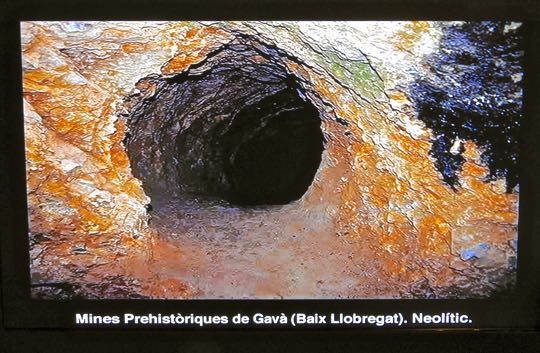
Variscite mine in the coastal mountains just south of Barcelona. This is one of 100 mining sites near the town of Gavá. Dating to 5,800 years ago, they are the oldest underground mines in Europe and among the oldest in the world. The miners were in search of variscite crystals, which are hydrated aluminum phosphate. The crystals have been used for thousands of years to create ornaments for personal decoration.

When the mines were examined by archeologists, they found partially worked beads of variscite, along with many other artifacts. These included tools made from silex and obsidian, a fertility goddess figure, and pottery. Some of the items recovered indicate that the mines were also used as grave sites. Human remains in the graves appear to be deceased miners whose bones show signs of injuries and deformation consistent with the work of mining.


Artist's conception of one of the mines. The mines consisted of multi-level galleries, including some with at least eight levels that extended down 15m (45ft) deep. Digging tools included stone axes and sledges and chisels of bone and antler. Sometimes the miners fractured the rock by heating it and then dousing it with cold water. The way the mines follow veins of variscite shows a considerable knowledge of rock strata.

The miners' engineering practices also show sophistication. They dug air shafts to the surface or to other galleries for ventilation and used some form of lamps for lighting. They left pillars of rock standing in order to support the gallery ceilings and prevent collapse. This was the case even when those pillars contained exploitable quantities of variscite. This awareness of mining concepts suggests that miners had become a specialized group within their Neolithic community. 


Variscite necklaces were important items in Neolithic trade. While some miners' wives probably enjoyed decorating themselves with the crystals that their husbands brought home, the extent of the mining activity indicates that most of the variscite was dug out for trading purposes. There is evidence near the mine entrances that the variscite was sorted and initially processed on-site. 

Since, the polishing and drilling of beads and final assembly of the jewelry was a more lengthy and delicate task, it probably occurred back at the miners' villages. Once a piece of jewelry was complete, it could be traded for other items of value either locally or with a visiting long-distance trader. The necklace above, being lightweight and compact, would have been perfect for a such a trader to carry in his backpack.


Shell necklaces were also valuable items of trade. Since Catalonia has a long coastline, shells would have been widely available to turn into jewelry. Many a long winter evening may have been spent carefully selecting, arranging, and drilling small shells in order to assemble them into a multi-strand necklace like this. 

By 6000 years ago, trade networks were well established throughout Europe, the Middle East and the Mediterranean coasts. Luxury items like jewelry were favored because of their high value in proportion to their size and weight. The materials to make jewelry included variscite, shells, jade, obsidian and amber. These came from sources as far away as Sicily, the Aegean, and the Baltic areas.  

Neolithic art 

Neolithic art on a stream bed stone. The abstract design of a spiky line dividing two sets of dots may have had ritual meaning. Neolithic art differs in several ways from that created by Paleolithic people. The hunter gatherers could not carry much with them so, the art they created was left on the walls of caves they visited, like Cova de Altamira in northern Spain. Their other major forms of art were Venus figurines, which were small enough to fit in the palm of a hand. 

By contrast, settled agricultural communities created a much wider variety of art. The art could be larger, heavier, and more fragile because it could remain in one place. Painted/incised pottery is an example of this. In addition, statues and figurines were often made of clay, which is a highly malleable medium, as well as other items more laboriously carved from stone, bone, antlers or wood. 


Neolithic cave painting of two women dancing. This painting is from a cave near El Cogul, southwest of Barcelona. During the Neolithic period, wall painting began to shift from the walls of caves to those of human-built structures. Consequently, very little Neolithic wall art survives, in comparison to the many scenes preserved deep inside cave complexes like Altamira

Paleolithic artists portrayed the wild animals of their world realistically, but humans only as stick figures. The Neolithic animal figures that survive include both wild and domesticated, but are not as beautiful or realistic as their Paleolithic counterparts. On the other hand, Neolithic wall art includes many more human figures and they are involved in a wider variety of activities, including dancing in pairs and groups, as well as hunting and warfare.

Another difference is that, unlike the Paleolithic portrayal of humans as stick figures, Neolithic human figures tend to be more robust, are often clothed, and sometimes wear complex headgear. A final difference is that, unlike the all-male figures seen in Paleolithic cave paintings, women begin to appear for the first time. The reason for this change is not clear, but it may be that Neolithic women had begun to do some of the painting.


Burial practices

Human remains found near Sant Pau del Camp in Barcelona. While Paleolithic Neanderthals and Homo sapiens both buried their dead with some level of ritual, burial practices in Neolithic times become much more elaborate. Bodies were typically placed on their left sides in the fetal position, as seen above. The amount and quality of grave goods increased, particularly for high status individuals. This reflects the move away from egalitarianism toward social stratification during the Neolithic period. 


Dolmens began to appear in the late Neolithic period. The end of the Neolithic period is called the Megalithic (Large Stone) Age because it was characterized by the construction of dolmens and other monuments using large rocks and boulders. Dolmens are stone burial chambers, the earliest of which appeared in Spain, Portugal, and France. 

Some of these structures were tombs, but others appear to have been pilgrimage sites for rituals celebrating astronomical events such as an equinox or solstice. While Stone Henge, located in the United Kingdom, is the best known of the Megalithic monuments, Spain has its own impressive examples. Some of the examples in Spain were constructed as much as 1000 years before Stone Henge.

The Dolmen of Menga, dated as early as 5,750 years ago, is located near Málaga, on the Mediterranean coast east of Gibraltar. It is one of the largest known megaliths in Europe, measuring 27.5m (90ft) long and 6m (20ft) wide. The structure contains 32 megaliths, the largest of which weighs a staggering 200 tons.


Dolmen under construction. They tend to be circular, with an entrance into a passage ending in a central chamber. Additional passages to other chambers sometimes radiated out from the central one. Archeologists study these sites intensively because their contents can tell us a great deal about the people who once used them. Their bones and teeth can reveal time frames, diets, pathologies, ritual beliefs, geographical origins and much more. 

Archeologists have determined that dolmens were sometimes used intensely for relatively short periods covering several generations. Some were then abandoned, sometimes for centuries or even millennia. After a long hiatus, the dolmens were sometimes re-used, again for relatively short periods. The different layers of burials sometimes show quite different burial practices. 


Model of a completed Neolithic dolmen. An example of a re-used dolmen was found at Alto de Reinose, near Burgos in northern Spain. The remains of twelve related individuals were found at the very bottom level. They had been placed there about 5,700 years ago. These relatively complete skeletons were found on their sides in the fetal position. The burials were primary, meaning the skeletons had not been moved to the dolmen after being de-fleshed elsewhere. 

The group at the bottom level included adult and adolescent males and females, but very few children. Examination of their bones and teeth showed that almost all had grown up locally, with only a few having spent their childhood elsewhere. No hunter-gatherers were among them since, by this time, few remained except in remote areas of Spain.

Their diet was very typical of Neolithic people at this time. It was composed primarily of cereal grains supplemented by meat from small domesticated animals such as sheep and goats. The teeth showed the cavities typical of grain eaters and the bones showed some degenerative diseases, cranial trauma, and healed fractures.


Carefully arranged skulls found in a Late Neolithic burial. As times changed, so did burial practices. At Alto de Reinose, the bones found nearest the surface were arranged very differently than those of the earlier group. These later bodies had been largely disarticulated and a number of skulls were missing. This strongly suggests they were secondary burials and that they skulls were retained elsewhere, possibly for ancestor worship. 

Some of the skulls which remained were carefully framed by the long bones, again suggesting a ritual purpose. While the bones and teeth showed similar pathologies to those of the earlier burials, some showed blunt force trauma to the skulls, indicating a violent death. 

This completes Part 3 of my Barcelona series. I hope you have enjoyed this peek into the Neolithic Age in Spain. If so, please leave any thoughts or questions in the Comments section below or email me directly. If you leave a question, please remember to include your email address so that I can respond in a timely manner.

Hasta luego, Jim


Tuesday, May 3, 2022

Barcelona Part 2: Paleolithic Catalonia's First People


Homo antecessor (the "pioneers")

A family portrait of new immigrants. Multiple hominins--human species that existed before homo sapiens (modern humans) arrived on the scene. All the other species have since become extinct or have been absorbed into the gene pool of Homo sapiens. The drawing above is an artist's conception of Homo antecessor, the first people who populated Europe (antecessor means "pioneer"). They may have well been the link between the Neanderthals and Homo sapiens, but this is disputed.

Homo antecessor arrived in Spain about 1.2 million years ago. They came either overland from the Middle East or possibly across the Mediterranean from North Africa. Their fossil bones and tools were discovered in 1994 in northern Spain's Sierra Atapuerca. Physically, they had powerful upper bodies, long limbs, and had an average height between 162.3-186.8cm (5'4"-6'2"). Their faces were more like modern humans than earlier hominins. (Photo from Sciencephoto.com


Homo antecessor tools. These simple tools were used for butchering meat and smashing bones for marrow. Homo antecessor lived in the Spanish highlands when it was warm and migrated to the coast when it got cold. There is no evidence that they made clothing, probably because the climate when they existed was relatively mild. There is also no evidence they used fire. Fossils indicate that a popular form of prey was the local deer and, lacking fire, they ate the meat raw.

There is evidence of cannibalism from butchering marks on some Homo antecessor bones. The similarity of the cuts to animal butchering indicates that this was probably for dietary rather than ritual reasons. Whether they actively hunted other groups or simply ate their own dead in dire circumstances is unclear. Somewhere around 800,000 years ago Homo Antecessor disappears from the Spanish fossil records, possibly due to increasing cold from an ice age. (Photo from Wikipedia).


Homo neanderthalensis (the Neanderthals)


A pair of Neanderthals debate the deeper meanings of cave art. Neanderthals may have arrived in Spain as early as 200,000 years ago. Their possible routes include overland from the Balkans or across the straits at Gibraltar, when ice age sea levels were lower. In Catalonia, to the north of Barcelona, Neanderthal fossils were found in a coastal cave called Cova del Gegant. Others were discovered at an inland site called Cova Serinya. Both caves were periodically used by Neanderthals roughly between 90,000 and 50,000 years ago. 

Until recently, this species has gotten a very bad press. Neanderthals have been portrayed as slow, dull-witted, unable to speak, and lacking in sophisticated stone age technology, art or symbolic thought. Supposedly, the only thing they were good at was killing large, slow-moving game like mammoths. Recent studies have proven all this to be false. 


Neanderthals coordinate their attack on a trapped mammoth.  Neanderthal brains were about the size of Homo Sapiens and their eyes and ears were larger and probably more acute. Physically heavier and stronger than modern humans, their leg muscles indicate they were built for short distance bursts of speed while hunting in their cold, heavily forested environment. By contrast, Homo Sapiens were physically more suited to long-distance pursuits over open savannas. Newly discovered Neanderthal hyoid bones (throat bones that allow speech) indicate the ability to talk and thus coordinate activities.


The oldest Neanderthal tools found in Spain date back 90,000 years. Neanderthals utilized fire and crafted increasingly sophisticated stone, wood, and bone tools. A variation of their bone tool for working leather is still used today. They also crafted articles for personal adornment. Those living near a coast ate large amounts of seafood as well as meat. They painted on Spanish cave walls and left mysterious stone circles that suggest the ability to make plans. They cared for injured or crippled family members, sometimes for many years. Neanderthals who died were sometimes given ritual burials

Today, non-African humans contain somewhere between 1-6% Neanderthal DNA. This indicates that they interbred with Homo sapiens. There is also evidence of cultural and technological exchanges between the two groups, although there may also have been conflicts. Neanderthals disappeared in most places about 40,000 years ago. Exactly why is still unclear, but extermination by Homo sapiens is a possibility. Modern humans have exterminated many other species.
 
Alternatively, climate and environmental changes may have favored modern humans over Neanderthals. A new theory points to a "volcanic winter" caused by a giant eruption in Italy about 40,000 years ago. The Neanderthal groups that survived would have been isolated and dispersed. They may simply have been absorbed into newly arriving waves of Homo sapiens. Somewhere between 28,000 and 24,000 years ago, the last of Europe's Neanderthals died out in Gibraltar. Ironically, that may well have been their point of arrival. 


Homo sapiens (that's us!)


Homo sapiens looking for Spain...are we there yet? Our species originated in Africa as much as 350,000 years ago. In 2019, Homo sapiens fossils were discovered in Greece and dated to 210,000 years ago. Migration into the rest of Europe, including Spain, was a very slow series of advances and retreats. 

The advances north occurred when periodic ice ages absorbed huge quantities of the earth's water. This caused North African lakes and rivers to dry out, forcing animals to move north toward the wetter climate just south of the glaciers. Since Homo sapiens depended upon the migrating animals for food, clothing, and tools, they followed them. 

If the glaciers retreated, more of southern Europe opened up to the migrants. If the glaciers advanced, Homo sapiens were pushed back, sometimes completely out of Europe. About 43,000 years ago, modern humans arrived in Spain, probably along the Catalonian coast from France, but they may also have come through Gibraltar. 

In Catalonia, Homo sapiens fossils have been discovered at Cove de Serinyi. The cave appears to have been a natural way station, since it had previously been used by the Neanderthals, as well as the even earlier Homo antecessor. Since then, the coastal route through Catalonia has been followed in both directions by countless migrating groups and invading armies.

Homo sapiens defend their catch from equally hungry predators.  Wooly mammoth fossils dating to as recently as 30,000 years ago have been found in southern Spain, so they would definitely have been on our ancestors' menu. The primary weapon for hunting or defense at that time would have been a spear, tipped with a stone point. Since these early spears were only effective when thrusted or thrown at short range, killing large animals like a mammoth or lion would have been dangerous work.


The tool kit of Homo sapiens was varied and versatile. After their arrival in Spain, and for the next 38,000 years or so, the Homo sapiens hunter-gatherer lifestyle became one of increasing complexity and sophistication. This was particularly true in the range of tools they made. The invention of specialized tools to make other tools was a major technological leap forward. 

These changes didn't occur in a vacuum. As mammoth, bison, and other large mammals disappeared due to climate change and overhunting, new technologies were needed to hunt smaller animals. In addition, a growing reliance on seafood resulted in the development of specialized tools like bone harpoons with serrated edges, barbed fish hooks, and nets. (Photo from The Open University)


The atlatl was a major technological advance in weaponry. An atlatl (top photo) is a stick with a notch on one end, into which is fitted a short spear or dart. The earliest atlatl yet found dates back 17,000 yearsThe word comes from the Nahuatl language of the Aztecs, who still employed it when the Spanish arrived. Dog owners may not realize it, but they use a variation of the atlatl when they throw a tennis ball to their pet, using a flexible plastic rod with cup on one end. A different purpose, but the principal is the same. 

Use of an atlatl not only increases the range of a throw, but also the force and impact of the dart. The lower photo shows how an atlatl was launched. Hunters could attack their game from a much greater distance than with a hand-held spear, improving their chance of surprise. If a hit was achieved, the result was also likely to be better. In addition to increasing the range, deadliness, and surprise effect, use of an atlatl decreased the danger of a close range attack. 


Paleolithic hunters use bows and arrows to attack a herd of elk. The next great advance in hunting technology was the bow and arrow. This technology began to replace the atlatl between 12,000 15,000 years ago, near the very end of the Paleolithic period. Both technologies co-existed for thousands of years, however. The gradual shift to the bow probably reflects the change in the game being hunted. 

Compared to the atlatl, the bow and arrow has both advantages and disadvantages. The advantages include the bow's greater range and accuracy, greater utility in dense forests, and the ability to fire on the move. The disadvantages include wet bow strings during bad weather and the lower impact of the lightweight arrow vs the heavier atlatl dart. 

An atlatl worked better against large, slow-moving game with thick hides that grazed in open areas, while bows were superior against smaller game in deep forests. So, as mammoths, bison, and other large mammals disappeared from the European environment, hunters turned to smaller game, including birds, against which the bow and arrow was more effective.

Painting of a Paleolithic bison at Cova de Altamira. Altamira is a complex of caves in northern Spain that contains both charcoal drawings and polychrome paintings. They were the first of their kind ever discovered and are of astonishing quality. With its wide, staring eyes and and extended tongue, you can almost hear the bison gasp and snort. His three forelegs may be due to the remains of a previous painting or the artist's attempt to represent leg movement. Some of the paintings use bulges in the cave's rock walls to create three-dimensional effects. 

The cave was discovered in 1868 but the paintings were not noticed until 1880, when an amateur archeologist's 8-year-old daughter happened to look up at the cave ceiling. The discovery of the paintings resulted in a bitter controversy that raged for 30 years. Many simply refused to believe that "cavemen" could produce such work. Then, in 1902, similar paintings were found elsewhere and this finally settled the issue.

The paintings appear to have been created over a span of about 10,000 years, between 25,000 and 36,000 years ago. In addition to bison, wild horses and other animals, stick-figure humans are portrayed. To me, the most haunting paintings are the many outlines of human hands. They create a sense of connection to actual individual humans across an immense span of time, a feeling that can't quite be matched by fossil bones or artifacts. 


Small statues called Venus figures were another form of art. Such figures were during the Upper Paleolithic period, probably between 25,000 and 35,000 years ago.  Unlike cave art, they are portable and small enough to be held in the palm of a hand. The figures are carved from bone, stone, or ivory and have been found throughout Europe, Eurasia, and as far away as Siberia. Many portray obese women, often pregnant, with bulging hips and breasts. However, the one on the left is a slender woman and the middle figure may be male.

The purpose of the figures is a matter of much dispute. They have been described as totems for fertility rites, expressions of male views of female beauty, self-portraits carved by Paleolithic women, and portrayals of a Paleolithic goddess. A recent theory suggests that the obesity was a totem against hunger and hardship during ancient climate change. Storage of fat in the body would help survival, particularly for pregnant women. 

In researching and writing this posting, I have been struck at how intelligent and resourceful our distant ancestors were, including those hominins who preceded our own species. What we call "civilization" is only about 10,000 years old. Our predecessors managed to survive and even thrive under extremely difficult circumstances for many hundreds of thousands of years, even before our species came on the scene. It is a humbling thought. 

This completes Part 2 of my Barcelona series. I hope you enjoyed it and, if so, you will leave any thoughts or questions in the Comments section below. If you leave a question, please remember to include your email address so that I can respond in a timely fashion.

Hasta luego, Jim